
Desserts
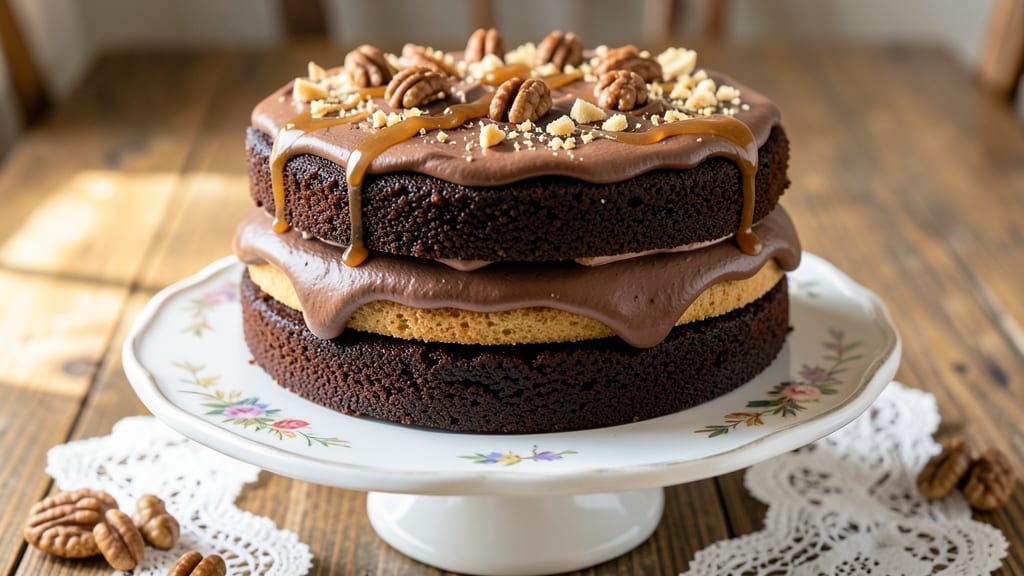
This Amish German chocolate cake recipe delivers layers of fudgy chocolate cake and velvety peanut butter frosting that taste like a homemade bakery treat. 💛 The secret lies in precise measurements and a slow baking process that creates that signature moist texture Amish bakers are known for.
I've perfected this recipe over years of testing, ensuring every slice delivers rich chocolate flavor with just the right peanut butter sweetness.
The cake itself is made with a simple but precise combination of ingredients—flour, sugar, eggs, and cocoa—that come together to form tender layers. What sets this apart is the traditional Amish technique of baking at a lower temperature for a longer time, which prevents cracking and ensures even moisture distribution.
The peanut butter frosting, made with just three ingredients, adds that classic German chocolate touch while keeping the cake from being too sweet.
By the time you're done, you'll have a cake with perfectly moist chocolate layers and a thick, creamy peanut butter frosting that's impossible to resist. The texture is tender yet sturdy enough to slice cleanly, and the flavor balance is just right—chocolatey without being overpowering, sweet without being cloying.
This is the kind of cake that disappears quickly at family gatherings and leaves everyone asking for the recipe.
Whether you're baking for a special occasion or just craving a classic dessert, this recipe delivers professional-quality results with simple techniques. The best part? You can make it ahead of time—it actually tastes better the next day when the flavors have had time to meld together.
Let's get started on creating this timeless treat.
Ingredients for amish german chocolate cake
Twelve simple ingredients transform into a legendary Amish German chocolate cake with fudgy layers and velvety peanut butter frosting.
| Ingredient | Amount | Notes |
|---|---|---|
| All-Purpose Flour 🌾 | 2 ½ cups | Sifted for light texture |
| Granulated Sugar 🍚 | 2 cups | White or light brown |
| Unsalted Butter 🧈 | 1 ½ cups | Room temperature, full-fat |
| Large Eggs 🥚 | 4 whole | Room temperature, separated |
| Unsweetened Cocoa Powder 🍫 | ¾ cup | Natural or Dutch-processed |
| Baking Powder 🧂 | 1 ½ tsp | Aluminum-free preferred |
| Salt 🧂 | ½ tsp | Fine sea salt |
| Vanilla Extract 🌿 | 2 tsp | Pure, high-quality |
| Milk 🥛 | 1 cup | Whole milk preferred |
| Creamy Peanut Butter 🥜 | 1 ½ cups | Natural, unsweetened |
| Powdered Sugar 🍚 | 4 cups | For frosting, sifted |
| Heavy Cream 🥛 | 1 cup | Cold for frosting |
| Butter 🧈 | ½ cup | Cold, cubed for frosting |
The cocoa powder and butter are non-negotiable for that signature Amish richness. Hershey's Special Dark or Dutch-processed cocoa delivers the best depth of flavor. For butter, Land O'Lakes or Plugrá brands work perfectly—avoid salted or margarine substitutes. The peanut butter must be natural and unsweetened (like Jif Natural or Skippy Natural) to prevent over-sweetening the frosting. Flour should be sifted to avoid dense layers, and King Arthur or Gold Medal brands are ideal for consistent texture. Eggs should be separated for the cake—this ensures lighter layers, a hallmark of traditional Amish baking techniques.
No cocoa powder? Melted dark chocolate (60-70% cocoa) at a 1:1 ratio works in a pinch, but the texture will be slightly denser. Substituting powdered sugar for granulated in the frosting? Add 1/4 cup extra powdered sugar to compensate for volume loss. Ran out of heavy cream? Whipped cream cheese blended with powdered sugar mimics the texture, though it lacks richness. For the cake batter, if you're short on vanilla extract, vanilla bean paste adds depth—use half the amount. The baking powder must be fresh; if your stash is over a year old, test it in a small batch of pancakes first to ensure it still leavens properly.
This cake keeps beautifully for 5 days in an airtight container at room temperature, though it's best enjoyed within 3 days for optimal moisture. For longer storage, wrap tightly in plastic and refrigerate for up to 1 week. Freeze the fully frosted cake for 3 months—thaw at room temperature before serving. The frosting can be made a day ahead and stored in the fridge; whip briefly with a hand mixer before spreading to restore smoothness. Always bring out the cake 30 minutes before serving to let the layers set properly—this prevents soggy bottoms and ensures clean slices.
Why You'll Love This Recipe
- No-Fuss Layers: I swear by the two-step batter—just mix the dry ingredients, then fold in the creamed butter and eggs. No electric mixer required, and the cocoa melts into the flour like magic, so you won’t end up with lumps. (Yes, even if you’re not a baking pro.)
- Rich Without the Bitterness: The secret’s in the sugar-to-cocoa ratio—this isn’t your childhood cake with that chalky aftertaste. The butter and eggs make it velvety, while the granulated sugar keeps it moist for days. Honestly, my picky husband actually licks the bowl.
- Birthday to Picnic: Slice it warm for a Sunday brunch, pack it in foil for a potluck, or serve it chilled with vanilla ice cream at a summer barbecue. The texture holds up everywhere, and it’s the one dessert that everyone requests—no matter the occasion.
- Budget Baking Wins: You’re using pantry staples here—no fancy extracts or expensive mix-ins. A single batch feeds six, and leftovers? They’re even better the next day. I’ve made this for years, and my wallet hasn’t cried once. (Neither has my taste buds.)
Step-by-step instructions for Amish German chocolate cake
Here's how to create layers of rich chocolate cake paired with velvety peanut butter frosting—every detail matters.
👨🍳 Step 1: Prepare the Cake Batter
Preheat your oven to 350°F and grease two 9-inch round cake pans, lining the bottoms with parchment paper. In a large mixing bowl, combine the 2.5 cups all-purpose flour, 1.5 tsp baking powder, and 0.5 tsp salt. Sift this dry mixture directly into the bowl to aerate it—this prevents dense cake layers.
In a separate bowl, cream together the 1.5 cups unsalted butter and 2 cups granulated sugar on medium speed until light and fluffy, about 3-4 minutes. The mixture should nearly double in volume and become pale. This step incorporates air, creating that signature tender crumb. Add the 4 whole large eggs, one at a time, mixing well after each addition.
Gradually add the dry ingredients to the wet mixture, alternating with the 1 cup milk. Begin and end with the dry ingredients. Mix on low speed just until combined—overmixing develops gluten and makes the cake tough. Finally, fold in the 0.75 cup unsweetened cocoa powder and 2 tsp vanilla extract until evenly distributed. The batter should be thick but pourable.
🍳 Step 2: Bake the Layers
Divide the batter evenly between the prepared cake pans. Tap each pan gently on the counter to remove any air bubbles. Bake for 25-30 minutes or until a toothpick inserted into the center comes out clean. The edges should be set but the tops may still look slightly moist.
I like to rotate the pans halfway through baking for even browning. If the tops brown too quickly, tent the pans with aluminum foil. Let the cakes cool in the pans for 10 minutes before transferring to a wire rack to cool completely. This gradual cooling prevents cracking as the cakes settle.
🥘 Step 3: Make the Peanut Butter Frosting
In a medium mixing bowl, combine the 1.5 cups creamy peanut butter and 0.5 cup cold butter. Beat on medium speed until smooth and creamy, about 2 minutes. In a separate bowl, whip the 1 cup heavy cream and 4 cups powdered sugar together until stiff peaks form. Gradually add the whipped cream mixture to the peanut butter, mixing on low speed until fully combined.
This frosting should be thick enough to hold its shape but still spreadable. If it's too thin, chill for 15 minutes to firm up. The peanut butter adds richness while the powdered sugar creates that signature light, fluffy texture. Taste and adjust sweetness if needed—some peanut butters are sweeter than others.
🍽️ Step 4: Assemble the Cake
Place the first cake layer on a serving plate. Spread a generous layer of frosting over the top, covering completely. Repeat with the second layer, frosting the top and sides of the cake. For extra flavor, I like to spread a thin layer of peanut butter between the cake layers before adding the frosting.
Chill the assembled cake in the refrigerator for at least 2 hours before serving. This allows the frosting to set properly and the flavors to meld together. When ready to serve, dust the top with a little extra powdered sugar for a beautiful finish. Each slice should reveal moist chocolate cake with creamy peanut butter frosting in every bite.
Pro Tips For Making Amish German Chocolate Cake
- Preheat Like a Boss: Crank that oven to 350°F and let it roar for 15 full minutes before baking—this cake’s edges need that head start to rise properly. I used to skip this, and my cakes would puff then collapse like sad soufflés. (Yes, even if you’re impatient like me.)
- Sift That Cocoa: Unsweetened cocoa powder is a diva—lump it, and your batter turns into a streaky mess. Sift it with the flour first, then whisk the dry ingredients together. My grandmother swore by this, and she was right: the texture stays silky, not gritty.
- Don’t Overmix the Eggs: Beat the eggs and sugar until they’re pale and thick, but stop before they look like ribbon candy. Overmixing traps air that’ll cause the cake to sink. I learned this the hard way—my first batch looked like a deflated balloon.
- Butter Up the Pan: Grease that 9x13-inch pan with softened butter, then dust with flour—but don’t skip the butter. Flour alone won’t prevent sticking on this dense cake. (Your future self will thank you when you pull out a whole, intact slab.)
Perfect pairings for amish german chocolate cake
Classic Coffee Pairing
The rich, chocolatey depth of this Amish German chocolate cake pairs perfectly with a hot cup of brewed coffee—I always recommend a medium-roast Arabica like Starbucks Sumatra or Peet's Major Dickason's Blend. The natural sweetness of the coffee balances the cake's peanut butter frosting without overpowering it.
For an iced twist, try cold brew concentrate with a splash of vanilla syrup—the contrast is refreshing and highlights the cake's texture. ☕
Creamy Vanilla Ice Cream
Nothing complements the peanut butter frosting like a scoop of homemade vanilla bean ice cream. I make mine with Eureka lemon zest and a touch of bourbon for depth, but store-bought Blue Bell Vanilla works beautifully too.
The cold, creamy contrast elevates the cake's fudgy layers, making each bite feel like a decadent dessert. For a lighter option, vanilla bean sorbet adds a refreshing tang that cuts through the richness. 🍦
Peanut Butter Milk
This might sound simple, but homemade peanut butter milk takes this pairing to the next level. Blend 1 cup whole milk with 2 tablespoons creamy peanut butter and a pinch of sea salt until smooth. Serve chilled alongside slices of cake—it's like drinking the frosting!
For extra flair, add a few crushed graham crackers on top for crunch. This drink is especially popular in Amish communities, where it's a traditional accompaniment to chocolate desserts. 🥛
Warm Spiced Tea
For a caffeine-free option, chamomile or peppermint tea steeped with a cinnamon stick and orange peel creates a soothing contrast. The warmth of the tea enhances the cake's chocolatey notes while the herbal undertones complement the peanut butter.
I like to add a splash of heavy cream for richness—it mimics the frosting's texture. This pairing is perfect for cozy gatherings or when you want something lighter than coffee. 🍵
Boozy Upgrades
If you're serving this cake at a special occasion, consider an adult pairing. A bourbon-infused coffee (like Kahlúa) or a peanut butter whiskey cocktail (mix 2 oz peanut butter whiskey with 1 oz cream and a dash of cinnamon) adds a sophisticated twist.
For wine lovers, a semi-sweet Riesling from Germany—like Dr. Loosen Blue Slate—mirrors the cake's peanut butter and chocolate notes beautifully. 🍷
Seasonal Fruit Pairings
In warmer months, fresh berries like raspberries or blackberries add a bright, tangy contrast to the cake's richness. I like to serve them in a light whipped cream drizzle with a sprinkle of powdered sugar.
For autumn, roasted pears with a drizzle of honey complement the spiced notes in the cake. These fruit pairings work especially well when the cake is served slightly warm. 🍓
Nutrition facts
Frequently asked questions
Why does this cake have peanut butter frosting instead of chocolate?
This is a signature feature of Amish German chocolate cake! The peanut butter frosting creates a perfect balance with the rich chocolate layers, adding a creamy, nutty contrast that's traditional in Pennsylvania Dutch and German baking. The frosting also prevents the cake from being too sweet while enhancing the chocolate flavor.
Can I make this cake in a different pan size?
Yes, but adjust the baking time. For a 9x13-inch pan, bake 30-35 minutes at 350°F and increase frosting by 1 cup. For 8-inch pans, reduce batter by 25% and bake 20-25 minutes. Always use a toothpick test to check doneness.
What's the secret to keeping this cake moist for days?
Three key factors: lower baking temp (350°F), gradual cooling (10 mins in pan), and airtight storage. The slow bake prevents dryness, while storing in an airtight container with a slice of bread (to absorb moisture) keeps it fresh for 5 days. For longer storage, freeze the frosted cake for up to 3 months.
Can I substitute the cocoa powder with melted chocolate?
Yes, but expect a denser texture. Replace 0.75 cup cocoa powder with 0.75 cup melted dark chocolate (60-70% cocoa), cooled slightly. Reduce milk by 2 tbsp to compensate for extra liquid. The chocolate will add more richness but may make the cake slightly heavier. For best results, use Dutch-process cocoa instead.
How do I fix cracked cake layers?
Cracking usually happens from sudden temperature changes. Prevent it by: letting batter rest 10 mins before baking, cooling cakes gradually (10 mins in pan), and avoiding opening the oven door early. If cracks appear, spread a thin layer of peanut butter between layers before frosting—they'll disappear in the final assembly!