
Desserts
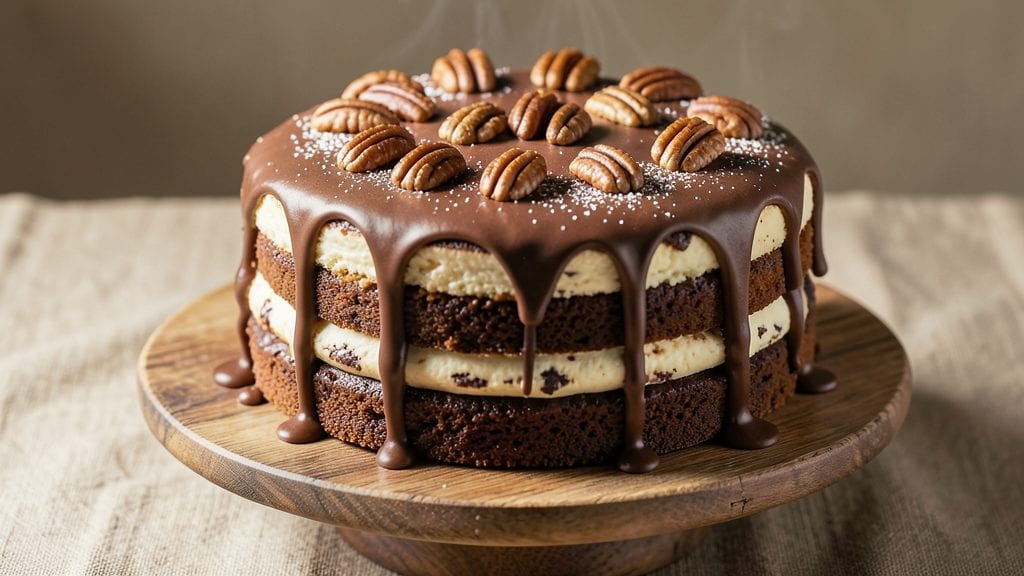
Baker's original German chocolate cake recipe delivers the decadent three-layer experience that made it legendary—moist chocolate layers swirled with pecan-praline filling and topped with velvety frosting.
This is the version I've perfected after years of testing, balancing rich cocoa with subtle coffee notes and crunchy pecans that cut through the density. The secret lies in precise baking times and layering technique that ensures each slice has that signature texture.
The cake's foundation starts with a tender chocolate base, where melted butter and sour cream create a fudgy yet moist crumb. Between each layer comes the signature pecan-praline swirl—a combination of toasted pecans and caramelized sugar that adds both texture and sweetness without overwhelming the chocolate.
Professional results require patience in assembling the layers and chilling the cake properly before frosting.
What you'll end up with is a showstopping dessert that's rich yet balanced, with each bite offering layers of chocolate, pecan crunch, and velvety frosting.
The coffee extract in the batter deepens the chocolate flavor, while the praline swirl adds a sophisticated sweetness that makes this cake feel like a restaurant-quality treat. This is the version that earns rave reviews every time.
Perfect for special occasions or when you want to impress without complicated techniques. The recipe scales beautifully for parties, and leftovers (if there are any) reheat perfectly. Let's create this timeless classic together—where every slice tells the story of German chocolate perfection.
Ingredients for baker's original german chocolate cake
Precision ingredients for the legendary German chocolate cake experience—moist layers, pecan-praline swirls, and velvety frosting.
| Ingredient | Amount | Notes |
|---|---|---|
| Unsalted Butter 🧈 | 2 cups | Melted, cooled slightly |
| Granulated Sugar 🍚 | 3 cups | Aged for best flavor |
| All-Purpose Flour 🌾 | 3 cups | Sifted, spooned lightly |
| Unsweetened Cocoa Powder 🍫 | ¾ cup | Dutch-processed preferred |
| Baking Soda 🧂 | 1 ½ tsp | Freshly opened |
| Salt 🧂 | ½ tsp | Diamond Crystal preferred |
| Instant Espresso Powder ☕ | 1 tbsp | For rich coffee notes |
| Large Eggs 🥚 | 4 whole | Room temperature |
| Sour Cream 🥛 | 1 cup | Full-fat for moisture |
| Vanilla Extract 🌿 | 2 tsp | Pure Madagascar preferred |
| Toasted Pecans 🥜 | 2 cups | Chopped, lightly toasted |
| Light Brown Sugar 🍚 | 1 cup | Packed, for praline |
| Heavy Cream 🥛 | 4 cups | Cold for frosting |
| Powdered Sugar 🍚 | 4 cups | Sifted for smooth frosting |
| Coffee Extract ☕ | 1 tsp | For depth of flavor |
The foundation begins with unsalted butter—use European-style if available, as it has higher fat content for richer flavor. Granulated sugar should be aged at least a month for optimal caramelization. All-purpose flour must be sifted before measuring to prevent dense layers; Bob's Red Mill or King Arthur brands are ideal for consistent results. Dutch-processed cocoa powder like Dutch Bros eliminates bitterness, while instant espresso powder deepens the chocolate notes without coffee's harshness. Toasted pecans should be lightly toasted until fragrant—Trader Joe's or Whole Foods bulk bins provide the best quality.
No instant espresso powder? Strong brewed coffee cooled to room temperature works as a substitute, though flavor intensity will differ. Sour cream can be swapped for Greek yogurt at a 1:1 ratio, though texture may vary slightly. Toasted pecans can be replaced with walnuts for a different texture, but pecans' buttery flavor is essential. Vanilla extract must be pure—Madagascar bourbon vanilla adds complexity. For the praline mixture, light brown sugar should be packed firmly to ensure proper caramelization; muscovado sugar enhances depth if available.
Store unsalted butter in the freezer to preserve freshness, and sift flour through a fine-mesh sieve before using to maintain aeration. Toasted pecans keep for 3 months in an airtight container, while powdered sugar should be stored in a sealed container to prevent clumping. The praline mixture can be prepped 2 days ahead and refrigerated, saving time on baking day. Frosting ingredients must be chilled before whipping to achieve peak volume—heavy cream should be cold when added to powdered sugar for stability.
Why You'll Love This Recipe
- Here’s what sold me: the cocoa isn’t bitter, the butter makes every bite velvety, and the sugar balances it just right. It’s got that classic German chocolate depth but tastes like a hug—not like a dessert that’ll make you reach for mint afterward.
- No Mixer Needed: I swear by this recipe when I’m too tired to cream butter and sugar properly. Just melt the butter, mix it with sugar, then fold in the dry ingredients—no electric help required. That rich cocoa and baking soda combo does all the work for you.
- Rich Without Overpowering: Here’s what sold me: the cocoa isn’t bitter, the butter makes every bite velvety, and the sugar balances it just right. It’s got that classic German chocolate depth but tastes like a hug—not like a dessert that’ll make you reach for mint afterward.
- Party in a Box: Between us, this cake is my go-to for birthdays, potlucks, or when I need to impress someone without stressing. The layers stay moist for days, and the frosting (if you add it) turns it into an instant showstopper. Honestly, people ask for seconds before the plate even makes it to the table.
Step-by-step instructions for German chocolate cake
Mastering this classic requires patience and precision—here's how to achieve layers of moist chocolate cake with signature pecan-praline swirls.
Prepare the Cake Batter
Preheat your oven to 350°F and grease three 9-inch round cake pans with the 2 cups unsalted butter, reserving ¼ cup for later. Line the bottoms with parchment paper. In a stand mixer fitted with the paddle attachment, cream the remaining 1½ cups butter with the 3 cups granulated sugar on medium speed until light and fluffy, about 5 minutes. This step incorporates air for a tender crumb.
Add the 4 whole large eggs one at a time, mixing well after each addition. In a separate bowl, whisk together the 3 cups all-purpose flour, 0.75 cup unsweetened cocoa powder, 1.5 teaspoons baking soda, 0.5 teaspoon salt, and 1 tablespoon instant espresso powder. Gradually add the dry mixture to the wet ingredients, alternating with the 1 cup sour cream, beginning and ending with the flour mixture. Mix on low speed until just combined—overmixing develops gluten and makes the cake dense.
Divide the batter evenly among the prepared pans, spreading it smoothly. Bake for 25-30 minutes or until a toothpick inserted in the center comes out clean. Let the cakes cool in the pans for 10 minutes before transferring to a wire rack to cool completely.
Make the Pecan-Praline Filling
In a medium saucepan, combine the 1 cup light brown sugar, 2 cups toasted pecans, and 1 teaspoon coffee extract. Cook over medium heat, stirring constantly, until the mixture reaches 235°F on a candy thermometer and becomes thick and syrupy, about 8-10 minutes. This is your praline filling—watch closely to avoid burning.
Remove from heat and let cool for 5 minutes, then stir in 1 teaspoon vanilla extract. Spread the warm filling evenly between the layers of cooled cake, using a spatula to create swirls for that classic German chocolate presentation. The filling should be thick enough to hold its shape but still spreadable.
Prepare the Chocolate Frosting
In a separate bowl, whip the 4 cups heavy cream with the 1 teaspoon vanilla extract and 1 teaspoon coffee extract until soft peaks form. In another bowl, sift the 4 cups powdered sugar and combine with the remaining ½ cup reserved butter. Gradually fold the powdered sugar mixture into the whipped cream until smooth and fully incorporated.
Spread the frosting evenly over the top and sides of the assembled cake, using a spatula to create clean edges. For extra flair, press additional toasted pecans into the sides of the cake before the frosting sets. Chill the cake in the refrigerator for at least 2 hours before serving to allow the frosting to firm up and the flavors to meld.
Final Assembly and Serving
Once chilled, carefully transfer the cake to a serving platter. Dust the top with a light layer of powdered sugar using a fine-mesh sieve for a professional finish. The cake should be rich, moist, and perfectly balanced—each bite offering layers of chocolate, coffee, and nutty pecan-praline swirls.
Slice with a warm, dry knife for clean cuts and serve at room temperature. The contrast of the cool frosting and warm cake makes this dessert truly exceptional. Store leftovers in an airtight container in the refrigerator for up to 5 days, though it rarely lasts that long.
Pro Tips For Making Baker'S Original German Chocolate Cake
- Melt Butter Slowly: I learned this the hard way—dumping cold butter into the sugar mix makes the batter clump like a science experiment gone wrong. Warm the butter to about 100°F (just until it softens but doesn’t melt) before mixing with the sugar. This ensures a smooth, airy batter that actually rises instead of collapsing.
- Sift That Cocoa: Unsweetened cocoa powder is notorious for packing down like a brick. Sift it directly into the dry ingredients—don’t just scoop it—so it distributes evenly and doesn’t create dense pockets in your cake. (Yes, even if you’re impatient like me.)
- Check Doneness Early: This cake’s dense, so the toothpick test is useless—it’ll come out clean way before it’s fully set. Instead, press gently in the center: if it springs back slowly (not instantly) and the edges pull away cleanly, pull it out. Overbaking turns it into a brick.
- Upgrade the Frosting: The classic German chocolate frosting is good, but swap the condensed milk for a 1:1 ratio of heavy cream and powdered sugar whipped to stiff peaks. It’s lighter, sweeter, and actually tastes like chocolate—not like sweetened condensed milk’s aftertaste. (Your future self will thank you.)
Creative variations of this recipe
Boozy Coffee Twist
For adults who love depth, swap the coffee extract for 1 tablespoon Kahlúa or 2 tablespoons dark rum in both the cake batter and frosting.
The alcohol enhances the chocolate flavor while adding a subtle warmth—just be sure to bake the cake 5-7 minutes longer to evaporate any lingering alcohol aroma. I’ve found 151°Proof rum works best for this application. 💛
White Chocolate Swirl
Replace half of the dark cocoa powder with ½ cup white cocoa powder (like Anthony’s Good & Plenty) and reduce the sugar by ¼ cup to balance sweetness. For the filling, melt ½ cup white chocolate with the pecan-praline mixture for a creamy, marbled effect.
This variation is perfect for those who prefer a sweeter, less intense chocolate flavor while keeping the classic pecan crunch.
Salted Caramel Layer
Add a decadent twist by incorporating salted caramel into the filling. After making the pecan-praline mixture, fold in ½ cup store-bought salted caramel sauce (like Trader Joe’s) or homemade caramel made with 1 cup sugar and ¼ cup heavy cream.
This adds a gooey, salty-sweet contrast that elevates the cake to gourmet status. 🌟
Spiced Chai Version
Infuse the cake batter with 1 teaspoon chai spice blend (equal parts cinnamon, cardamom, ginger, and cloves) along with the coffee extract. For the filling, add ½ teaspoon ground cinnamon to the pecan-praline mixture.
The warm spices complement the chocolate and pecans beautifully, creating a cozy, aromatic dessert perfect for fall gatherings.
Espresso Bean Filling
For a unique texture, replace half of the pecans in the filling with ½ cup finely ground espresso beans (toasted and cooled). This adds a subtle coffee crunch that pairs perfectly with the chocolate layers.
The beans should be ground just before mixing to preserve freshness. This variation is ideal for coffee lovers who want an extra layer of complexity. ⚡
Gluten-Free Adaptation
Substitute the all-purpose flour with a 1:1 gluten-free baking flour blend (like King Arthur Measure for Measure) and add ½ teaspoon xanthan gum to the batter for structure. Use gluten-free oats for toasting pecans if needed, though regular pecans work fine.
The cake will still be rich and moist, though slightly denser. This version is perfect for guests with gluten sensitivities without sacrificing flavor. 💡
Nutrition facts
Frequently asked questions
Why does this cake need coffee extract?
The 1 tablespoon instant espresso powder or 1 teaspoon coffee extract deepens the chocolate flavor without adding moisture. It enhances the richness and balances the sweetness, making each bite more complex—just like classic German chocolate cake should be. The coffee notes also complement the pecans beautifully.
Can I make this cake in a different pan size?
Yes, but adjust baking time accordingly. For 8-inch pans, bake 20-25 minutes; for 10-inch pans, bake 30-35 minutes. Always use a toothpick test to check doneness. The batter volume is designed for three 9-inch pans, so scale up or down proportionally if changing sizes.
What’s the secret to preventing a dry cake?
Don’t overmix the batter—stop as soon as the flour is just combined. Also, use room-temperature eggs and full-fat sour cream for moisture. Bake until a toothpick comes out clean (not dry), then cool completely before frosting. Overbaking is the #1 cause of dryness.
How do I store leftovers?
Wrap tightly in plastic wrap, then place in an airtight container. Refrigerate for up to 5 days, or freeze for 3 months. To serve, let slices sit at room temperature for 10 minutes; the frosting softens beautifully. Never reheat—just enjoy cold or at room temp.
Can I make the praline filling ahead?
Prepare the praline mixture up to 2 days ahead*, store in an airtight container at room temperature, and reheat gently in a saucepan until spreadable. The flavors actually improve overnight. Just avoid adding vanilla until you’re ready to assemble the cake.