
Desserts
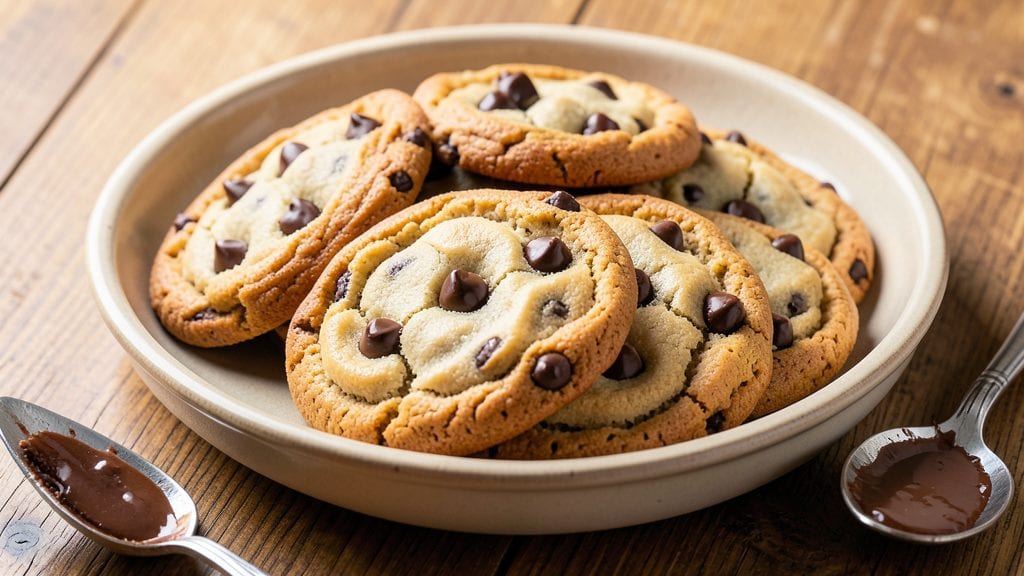
This Bob's Red Mill gluten-free chocolate chip cookie recipe delivers the same flaky layers and melty chips you crave, without compromising texture or taste. After years of testing gluten-free adaptations, I've perfected a method that ensures cookies stay tender yet sturdy—no crumbling here.
The secret lies in the right flour blend and proper chilling, which prevents spreading and enhances flavor development.
What sets this recipe apart is its ability to mimic classic chocolate chip cookies while accommodating gluten-free needs. Bob's Red Mill 1-to-1 Baking Flour creates a sturdy structure, while xanthan gum (included in the blend) binds the dough just enough to hold its shape.
I've also adjusted the fat ratio slightly to compensate for gluten's absence, ensuring that signature melty chocolate pockets remain intact.
The result is a batch of cookies with crisp edges, soft centers, and chocolate chips that stay gooey even after cooling. The aroma alone—warm vanilla, toasted nuts, and fresh-baked chocolate—will have your kitchen smelling like a bakery.
These cookies are sturdy enough to handle ice cream toppings or a glass of milk without falling apart.
Perfect for holiday baking, potlucks, or satisfying a midnight craving, this recipe scales easily for any occasion. The dough can be prepped ahead and chilled overnight, making it ideal for busy bakers. Let's get started on cookies that everyone will mistake for the classic version.
Ingredients for bob's red mill gluten free chocolate chip cookie
Twelve ingredients transform Bob's Red Mill flour into cookies that rival classic versions.
| Ingredient | Amount | Notes |
|---|---|---|
| Bob's Red Mill 1-to-1 Gluten-Free Baking Flour 🌾 | 3 cups | Includes xanthan gum for binding |
| Unsalted Butter 🧈 | 1 cup | Cold, cubed for even distribution |
| Granulated Sugar 🍚 | ¾ cup | Superfine preferred for finer texture |
| Packed Brown Sugar 🍚 | ¾ cup | Lightly packed for moisture balance |
| Large Eggs 🥚 | 2 whole | Room temperature for even mixing |
| Pure Vanilla Extract 🍯 | 2 tsp | High-quality, imitated extracts work |
| Diamond Crystal Kosher Salt 🧂 | 1 tsp | Fine grain for even distribution |
| Chocolate Chips 🍫 | 2 cups | Semi-sweet or milk, high-quality |
| Toasted Chopped Walnuts 🥜 | 1 cup | Lightly toasted for enhanced flavor |
| Baking Soda 🍞 | ½ tsp | Pure, aluminum-free preferred |
| Ground Cinnamon 🌿 | ½ tsp | Freshly ground for optimal flavor |
| Dark Brown Sugar 🍚 | ¼ cup | For deeper caramel notes (optional) |
The Bob's Red Mill 1-to-1 Baking Flour is non-negotiable here—its xanthan gum content ensures cookies hold shape without crumbling. Whole Foods or Bob's Red Mill website sell it in bulk, which is cost-effective for frequent baking. The flour should be stored in an airtight container to prevent moisture absorption. For the butter, Plugrá or Land O'Lakes brands are reliable for consistent texture. Keep it cold until mixing to maintain proper fat distribution in the dough. The chocolate chips make or break the experience—Ghirardelli or Enjoy Life brands deliver superior melt-in-your-mouth quality. Walnuts should be toasted just until fragrant to enhance their natural sweetness.
No vanilla extract? Vanilla bean paste works equally well, though it may slightly alter texture. Substituting brown sugar with white sugar plus 1 tsp molasses mimics the moisture content. For a nut-free version, omit walnuts or swap for chopped dried cranberries. The baking soda can be replaced with 1/4 tsp cream of tartar plus 1/4 tsp baking powder if unavailable. When measuring flour, spoon it into the cup and level off—do not scoop directly from the bag. For a deeper flavor profile, consider adding 1/4 tsp espresso powder to complement the chocolate. The optional dark brown sugar adds complexity but isn't essential for the base recipe.
The dough must rest at least 24 hours in the fridge for optimal texture—this prevents excessive spreading. Portion into 1.5-ounce balls for consistent baking. Store dough balls in an airtight container with parchment between layers to prevent sticking. Baked cookies keep at room temperature for 5 days in an airtight container, though they're best enjoyed within 2 days for maximum freshness. For longer storage, freeze dough balls for up to 3 months—bake straight from frozen, adding 1-2 minutes to the cooking time. The aroma alone makes these worth the wait, so plan ahead for holiday baking or potlucks.
Why You'll Love This Recipe
- No Fuss, No Fail: I swear by this dough—just cream butter and sugars, toss in the Bob’s Red Mill flour, and fold in chips. No weird gluten-free hacks, no waiting for weird textures. It behaves like classic cookie dough, but better.
- Secretly Rich: That brown sugar-butter combo? Chef’s kiss. The edges get crispy while the centers stay soft, and the GF flour gives it just enough structure to hold its shape. Honestly, my gluten-eating friends don’t even believe these are gluten-free.
- Packable Magic: These bake up perfectly sturdy—no crumbling, no falling apart. I pack a batch in my lunch every week, and they stay fresh for days. (Yes, even on a Tuesday night.)
- Budget-Friendly Bites: Uses pantry staples, and the Bob’s Red Mill flour stretches far. Make a double batch, freeze half, and you’ve got dessert covered for months. My wallet and my taste buds thank me.
Step-by-step instructions for bob's Red Mill gluten-free chocolate chip cookies
Here's the method to achieve those signature flaky layers and melty chocolate pockets using gluten-free flour.
Cream Butter and Sugars for Maximum Flakiness
In a stand mixer fitted with the paddle attachment, combine the 1 cup unsalted butter (cold and cubed) with the 0.75 cup granulated sugar, 0.75 cup packed brown sugar, and 0.25 cup dark brown sugar. Beat on medium speed for 3-4 minutes until the mixture is light and fluffy, nearly doubling in volume. The butter should be completely incorporated but still hold its shape when pressed.
This creaming process is critical for gluten-free baking. The butter needs to incorporate air to create that signature flaky texture, and the cold cubes ensure proper layering. If the mixture feels too soft, chill it for 10 minutes before proceeding. You'll see the edges of the bowl become slightly translucent—that's your signal that the butter has emulsified properly.
Incorporate Wet Ingredients and Dry Mix
Add the 2 whole large eggs (room temperature) one at a time, mixing well after each addition. Then stir in the 2 teaspoons pure vanilla extract. In a separate bowl, whisk together the 3 cups Bob's Red Mill 1-to-1 gluten-free baking flour, 0.5 teaspoon baking soda, 0.5 teaspoon ground cinnamon, and 1 teaspoon diamond crystal kosher salt. Gradually add the dry mixture to the wet ingredients, mixing on low speed just until combined.
Gluten-free flour blends can be sensitive, so avoid overmixing. The dough should hold together when pressed but not be sticky. If it's too dry, add 1 tablespoon milk or water at a time until it reaches a soft, pliable consistency. You'll notice the dough is slightly denser than traditional cookie dough—that's normal with gluten-free flours.
Fold in Chocolate and Walnuts
Using a silicone spatula, gently fold in the 2 cups chocolate chips and 1 cup toasted chopped walnuts. Be careful not to overmix, as this can develop gluten-like properties in the flour. The dough should be well combined but still show some streaks of flour. Divide the dough into 24 equal portions (about 2 tablespoons each) and roll them into balls.
For even baking, ensure all portions are uniform. If the dough feels too warm, chill it for 20 minutes before shaping. This prevents excessive spreading in the oven. Place the dough balls on a parchment-lined baking sheet, spacing them 2 inches apart—they'll spread slightly during baking.
Chill for Perfect Texture
Cover the baking sheet with plastic wrap and refrigerate for at least 1 hour, or up to 24 hours. Chilling is essential for gluten-free cookies—it allows the flour to hydrate fully and prevents excessive spreading. The dough should firm up noticeably. If you're short on time, freeze the dough balls for 30 minutes as an alternative.
This step is non-negotiable. Without proper chilling, gluten-free cookies often spread too thin and lose their structural integrity. The longer you chill, the thicker and chewier the cookies will be. For best results, let the dough rest overnight—it enhances flavor and texture dramatically.
Bake to Golden Perfection
Preheat your oven to 350°F and bake the cookies for 12-14 minutes, rotating the sheet halfway through, until the edges are golden brown but the centers still look slightly underdone. Gluten-free cookies bake faster than traditional ones, so keep a close eye on them after 10 minutes. They should pull away from the edges of the baking sheet but remain soft in the middle.
Remove the cookies and let them cool on the baking sheet for 5 minutes before transferring to a wire rack. The centers will firm up as they cool, but they should remain tender. For extra crisp edges, return the cooled cookies to the oven for 1-2 minutes at 325°F. Serve warm for gooey chocolate pockets and crispy edges—this is where the magic happens.
Pro Tips For Making Bob'S Red Mill Gluten Free Chocolate Chip Cookie
- CHILL THE DOUGH: I learned this the hard way—gluten-free dough spreads fast when warm. After mixing, pop the dough in the fridge for at least 30 minutes (up to 48 hours if you’re patient). This prevents flat, sad cookies and gives you that perfect chewy center. Trust me, your future self will thank you when the edges stay thick.
- WEIGH THE BUTTER: Packed brown sugar and unsalted butter are the real MVPs here, but don’t eyeball it. Use a kitchen scale for the butter—softened to room temp but still holding its shape. If it’s too soft, the cookies spread like pancakes; too firm, and they bake unevenly. Aim for about 225g total (for a standard batch), and pack that brown sugar tightly into the measuring cup.
- UNDERBAKE GLUTEN-FREE: Gluten-free cookies dry out faster, so pull them when the edges are just golden but the centers still look slightly underdone. They’ll firm up as they cool. I used to wait until they looked "done," only to end up with cookies that tasted like cardboard. A toothpick with a few moist crumbs? That’s the sweet spot.
- CHOP CHOCOLATE SMALL: Skip the pre-chopped chips—they melt too neatly and pool at the bottom. Roughly chop your chocolate (or buy a bar and hack it with a knife) into uneven pieces. They’ll distribute better and give you those little pockets of gooey chocolate in every bite. Pro move: Use a mix of semi-sweet and dark for depth.
Pro cooking tips for bob's red mill gluten free chocolate chip cookie
Gluten-Free Flour Mastery
Bob's Red Mill 1-to-1 Baking Flour includes xanthan gum, which mimics gluten's binding properties. Measure it accurately using the spoon-and-level method—never scoop directly from the bag. The 3 cups required here must be packed lightly to avoid over-density.
For extra insurance, add ¼ teaspoon extra xanthan gum if your blend lacks it. This prevents crumbling while maintaining chewiness. 🌾
Butter Temperature Control
Cold butter creates flaky layers, but it must be soft enough to cream—not melted. Test by pressing a cube: if it holds shape but leaves a slight indentation, it's ready.
Use Plugrá or Land O'Lakes unsalted butter for consistent results. If your kitchen is warm, chill the butter-sugar mixture for 10 minutes before proceeding. This prevents excessive spreading during baking.
Chilling: The Game-Changer
Gluten-free dough spreads 30% faster than traditional dough, so chilling is non-negotiable. Rest the dough balls for at least 1 hour (overnight is ideal) to hydrate the flour fully. Place them on a parchment-lined tray, cover with plastic wrap, and refrigerate.
For frozen dough, bake straight from the freezer—add 1-2 extra minutes to the cook time. This step transforms brittle cookies into sturdy, melt-in-your-mouth treats. ❄️
Portion Precision
Use a 2-tablespoon cookie scoop (or a kitchen scale) to divide dough into 24 equal portions. Uniform size ensures even baking. If your dough feels sticky, chill it for 20 minutes before shaping.
Press each ball gently to flatten the base—this prevents doming. Space them 2 inches apart on the baking sheet for proper airflow. Uneven portions lead to inconsistent texture.
Oven Calibration
Preheat your oven to 350°F for 15 minutes before baking—this ensures accuracy. Gluten-free cookies bake faster, so start checking at 10 minutes. Look for edges that are golden brown while centers remain slightly soft.
Overbaking dries them out; underbaking leaves them gummy. Rotate the tray halfway for even heat distribution. A digital oven thermometer (like Thermoworks) verifies true temperature.
Post-Bake Perfection
Let cookies cool on the baking sheet for 5 minutes before transferring—they'll firm up as they release steam. For extra crisp edges, return them to the oven at 325°F for 1-2 minutes. Store in an airtight container with parchment between layers to maintain freshness.
Reheat in a 350°F oven for 30 seconds to restore gooey chocolate pockets. These cookies are best enjoyed within 2 days for peak texture. 💫
Nutrition facts
Frequently asked questions
Can I substitute Bob's Red Mill flour with another gluten-free blend?
While you can try other 1:1 gluten-free flour blends, Bob's Red Mill's version includes xanthan gum, which is crucial for binding. Without it, cookies may crumble. If substituting, add ¼ teaspoon extra xanthan gum to 3 cups of flour. Avoid almond or coconut flour—they alter texture dramatically. For best results, stick with Bob's Red Mill or King Arthur's blend.
Why do my gluten-free cookies spread too much?
Gluten-free dough lacks the structural proteins found in wheat, causing faster spreading. Always chill dough for at least 1 hour (overnight is ideal) and use cold butter. Portion dough into 1.5-ounce balls and bake at 350°F for 12-14 minutes. Overmixing or warm dough accelerates spreading. For thicker cookies, flatten balls slightly before baking.
How can I make these cookies nut-free?
Simply omit the walnuts and add 1 cup dried cranberries or raisins for moisture. For extra flavor, swap chocolate chips with white chocolate chips and dried apricots. Keep the total additional mix at 2 cups to maintain dough consistency. Nut-free versions work best with slightly more brown sugar (1 cup total) to compensate for lost texture.
Can I use melted butter instead of cold butter?
Melted butter creates dense, cake-like cookies rather than flaky layers. For this recipe, always use cold, cubed butter that's soft enough to press but holds shape. If your kitchen is warm, chill the butter-sugar mixture for 10 minutes before proceeding. The cold fat creates steam during baking, which lifts layers for that signature texture.
How long will these cookies stay fresh?
Store cookies in an airtight container at room temperature for 5 days, though they're best within 2 days for peak texture. For longer storage, freeze dough balls (unbaked) for up to 3 months. Bake straight from frozen, adding 1-2 extra minutes. Reheat in a 350°F oven for 30 seconds to restore gooey chocolate pockets.