
Desserts
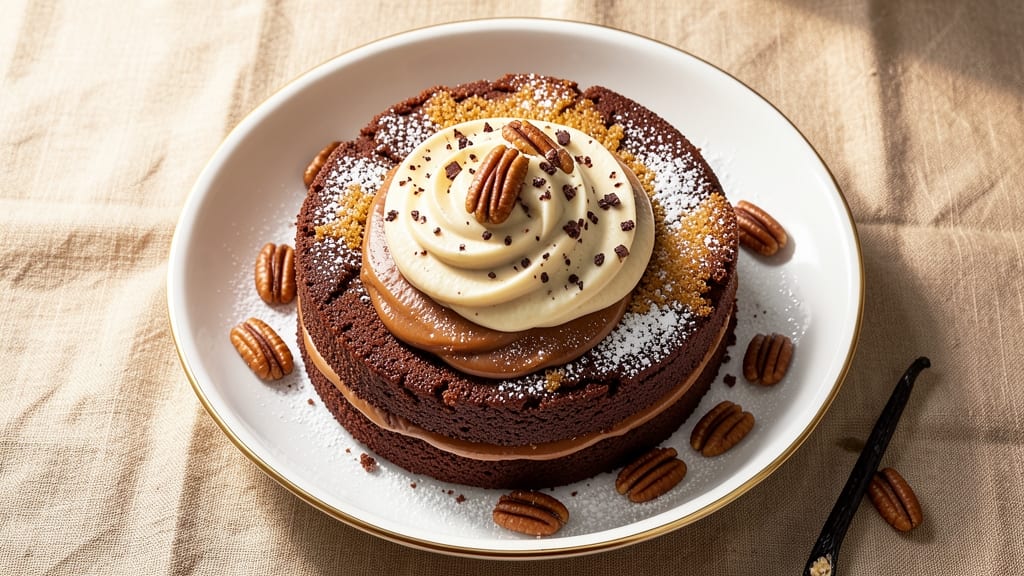
This Kraft German Chocolate Cake recipe delivers the rich, fudgy layers and nutty pecan swirls that make it a classic dessert favorite.
The secret lies in using Kraft chocolate for that signature deep cocoa flavor, combined with vanilla bean extract for an aromatic depth that sets this cake apart from store-bought versions.
I've perfected this recipe over years of baking, ensuring every slice has that perfect balance of moist cake, velvety frosting, and crunchy pecan topping.
The real magic happens in the assembly—swirling homemade chocolate fudge into the cake batter before baking creates those signature pockets of gooey goodness. The frosting, made with Kraft chocolate, is thick and creamy, while the pecan topping adds a satisfying crunch that contrasts beautifully with the tender layers.
This isn't just a cake; it's an experience that tastes like nostalgia and comfort in every bite.
What makes this recipe foolproof is the step-by-step process, from baking the layers to assembling with precision. The cake stays moist for days, the frosting holds its shape, and the pecan topping stays crispy even after slicing.
Whether you're baking for a special occasion or just treating yourself, this cake delivers restaurant-quality results with minimal effort.
Ready to impress your guests? Let's get started with the ingredients and instructions that will guide you through every step of creating this timeless dessert. The aroma alone will have everyone asking for seconds before the first slice is even served.
Ingredients for kraft german chocolate cake
Pantry staples plus a few specialty touches—this cake delivers that iconic Kraft German Chocolate experience.
| Ingredient | Amount | Notes |
|---|---|---|
| All-Purpose Flour 🌾 | 3 cups | Sifted for light texture |
| Granulated Sugar 🍚 | 2 ½ cups | White or light brown |
| Unsalted Butter 🧈 | 1 ½ cups | Room temperature, not melted |
| Kraft Chocolate 🍫 | 8 oz | Baking squares, chopped fine |
| Large Eggs 🥚 | 4 whole | Room temperature |
| Vanilla Bean Extract 🌿 | 2 tbsp | Seeds scraped from 1 bean |
| Baking Powder 🍞 | 1 ½ tsp | Aluminum-free preferred |
| Salt 🧂 | ½ tsp | Fine sea salt |
| Whole Milk 🥛 | 1 cup | Room temperature |
| Pecans 🥜 | 2 cups | Chopped, toasted lightly |
| Semisweet Chocolate Chips 🍫 | 1 ½ cups | For fudge filling |
| Heavy Cream 🥛 | 1 cup | Cold for frosting |
| Powdered Sugar 🍚 | 3 cups | For frosting |
| Vanilla Extract 🌿 | 1 tbsp | Pure vanilla |
| Butter 🧈 | ½ cup | Cold, cubed for frosting |
The Kraft chocolate is non-negotiable here. Grab the 8-ounce baking squares—they're the real deal, not the chips. Trader Joe's and Walmart usually stock them, but if you can't find them, Hershey's Special Dark Baking Bars work in a pinch. The vanilla bean extract? Splurge on a real one—it makes a world of difference compared to imitation. Pecans should be toasted lightly (just until fragrant) to bring out their nutty flavor. For the frosting, use European-style butter if you can find it—it's higher in fat and gives a richer texture.
No vanilla bean extract? Pure vanilla extract plus a pinch of vanilla sugar works, but it won't be as aromatic. Short on pecans? Macadamia nuts or walnuts add a nice twist, though the texture will differ. The chocolate chips for the fudge filling can be swapped for chopped Kraft chocolate if you're out of chips—just melt them first. For the frosting, if you're avoiding dairy, coconut cream whipped chilled gives a similar consistency. And if you're making this ahead, assemble the cake layers the day before—the flavors meld even better overnight.
This cake stays fresh for 5 days if wrapped tightly in plastic at room temperature. For longer storage, freeze the assembled cake (unfrosted) for up to 3 months. The frosting can be made a day ahead and stored in the fridge—just rewhip it before spreading. Pecan topping? Toast it fresh before baking—it keeps its crunch that way. And if you're feeling fancy, dust the top with powdered sugar right before serving. Trust me, it's worth the extra minute.
Why You'll Love This Recipe
- I’ll be real: Kraft chocolate and butter make this taste like a bakery dessert, but the cost? A fraction. One box of chocolate covers two cakes, and the rest of the ingredients are pantry staples. It’s the kind of recipe that makes frugal baking feel indulgent.
- No Mixer Needed: I swear by this—just fold the melted butter into the dry ingredients with a wooden spoon. No electric mixer, no sticky mess, and the texture comes out perfectly tender every time. That Kraft chocolate? It melts into the batter like a dream, so you don’t even have to chop it.
- Peanut Butter Frosting Magic: Between us, the frosting is where this cake steals the show. Whipped with powdered sugar and a splash of milk, it’s ridiculously good straight from the fridge. Honestly, the first time I made this, I ate half the bowl before frosting the cake—no judgment.
- Weeknight Crowd-Pleaser: This is my go-to for birthdays, potlucks, or when my book club shows up unannounced. Bake it in two 9x13 pans, and you’ve got a dessert that feeds 12 without breaking the bank. Leftovers? They last forever—I’ve reheated slices in the microwave for days, and no one complains.
Step-by-step instructions for Kraft German chocolate cake
Here's how to make this decadent cake with rich chocolate layers and gooey pecan fudge swirls.
Prepare the Cake Batter
Preheat your oven to 350°F and grease two 9-inch round cake pans, lining the bottoms with parchment paper. In a large mixing bowl, cream together the 1.5 cups unsalted butter and 2.5 cups granulated sugar on medium speed until light and fluffy, about 3-4 minutes. This step is crucial—it incorporates air that makes the cake tender.
Add the 4 whole large eggs, one at a time, mixing well after each addition. Then whisk in the 2 tbsp vanilla bean extract and 1 cup whole milk until fully combined. In a separate bowl, sift together the 3 cups all-purpose flour, 1.5 tsp baking powder, and 0.5 tsp salt. Gradually add the dry ingredients to the wet mixture, mixing just until combined—don't overmix or the cake will be dense.
Make the Fudge Filling
While the cake batter rests, prepare the fudge filling. In a medium saucepan, melt the 8 oz Kraft chocolate and 1.5 cups semisweet chocolate chips over low heat, stirring constantly until smooth. Remove from heat and stir in the 2 cups chopped pecans and 1 tbsp vanilla extract. Let the mixture cool slightly but keep it warm enough to swirl easily.
Here's the thing—this filling needs to be thick but still pourable. If it starts to set too quickly, microwave it in 10-second bursts until it's just warm enough to work with. The goal is a rich, gooey texture that swirls beautifully into the cake layers.
Layer and Bake the Cake
Divide the cake batter evenly between the two prepared pans. Pour about ⅓ of the fudge filling over one layer, then use a knife to swirl it gently through the batter. Add the second layer of batter, then top with the remaining fudge filling. Swirl again, but don't overmix—just create gentle ribbons of chocolate through the cake.
Bake for 25-30 minutes or until a toothpick inserted in the center comes out clean. I check at 25 minutes because ovens vary—you want golden edges but still moist cake. Let the cakes cool in the pans for 10 minutes before transferring to a wire rack to cool completely.
Make the Vanilla Bean Frosting
While the cakes cool, prepare the frosting. In a large bowl, beat the 0.5 cup cold butter and 3 cups powdered sugar together until smooth. Add the 1 cup cold heavy cream and 1 tbsp vanilla extract, mixing until light and fluffy. This frosting should be thick enough to hold its shape but still spreadable—if it's too stiff, add 1 tsp milk to loosen it.
The cold butter is key here—it creates a stable frosting that won't melt too quickly. Beat on high speed for about 2 minutes until it's smooth and creamy. If you're impatient, chill the bowl in the freezer for 5 minutes before beating to help it come together faster.
Assemble and Decorate
Once the cakes are completely cool, level the tops if needed. Place one layer on a serving plate and spread a generous layer of frosting on top. Add the second cake layer and cover it completely with the remaining frosting. Use a spatula to smooth the sides and create clean edges.
For decoration, sprinkle the top with additional chopped pecans and any leftover chocolate shavings. Let the frosting set for at least 30 minutes in the refrigerator before slicing. This cake is rich and moist, so the longer it rests, the better the texture will be when you serve it—each slice should be tender with those perfect pecan fudge swirls throughout.
Pro Tips For Making Kraft German Chocolate Cake
- Melt Butter Slowly: I learned this the hard way—dumping cold butter straight into hot sugar makes a greasy mess that won’t emulsify right. Instead, melt the butter first, then pour it gradually into the sugar while stirring constantly. The goal is to avoid lumps that’ll leave your cake dense and uneven.
- Sift That Flour: Kraft German Chocolate Cake relies on lightness, and skipping the sifting is a shortcut that backfires. Use a fine-mesh sieve to aerate the flour before mixing—this prevents a heavy, brick-like texture. (Yes, even if the recipe doesn’t say it—trust me.)
- Avoid Overmixing Batter: The second you see streaks of flour disappear, stop mixing. Overworking the batter develops gluten, which turns your cake into a chewy loaf instead of a tender, moist slice. Scrape the bowl once or twice if needed, but resist the urge to "get it all."
- Chill the Batter: Pour the batter into your pan, then pop it in the fridge for 15–20 minutes before baking. This prevents a domed, cracked top and ensures even rising—especially important with Kraft chocolate’s tendency to sink. (Your future self will thank you for this tiny wait.)
Common mistakes when making this dish
Overmixing the Batter
I’ve ruined more German chocolate cakes than I’d like to admit by overmixing the batter. Once you’ve incorporated the dry ingredients, stop mixing immediately after they’re just combined—about 10-15 strokes with a spatula.
Overmixing develops gluten, which makes the cake dense and chewy instead of light and tender. The goal is a smooth, slightly lumpy batter that holds its shape when swirled with the fudge. 🥄
Skipping the Cooling Step
Rushing to frost the cake before it’s completely cool is a rookie mistake. Let the layers cool in the pans for 10 minutes first, then transfer to a wire rack to cool for at least 1 hour.
If you frost warm layers, the butter in the frosting will melt, causing it to slide off or create a soggy bottom. I’ve learned this the hard way—trust the process, and your cake will stay sturdy and delicious. ⏳
Incorrect Fudge Temperature
The fudge filling must be warm enough to swirl but not so hot that it melts the cake batter. If it’s too cool, it’ll clump and create uneven pockets. If it’s too hot, it’ll cook the batter too quickly, leading to a burnt top.
Aim for a temperature where it’s just warm to the touch—about 120-130°F. If it starts to thicken too quickly, microwave it in 5-second bursts to maintain the right consistency. 🌡️
Uneven Filling Distribution
Pouring too much fudge into one layer or not distributing it evenly will result in a cake that’s heavy on one side. Divide the filling evenly between the layers—about ⅓ of the total filling per layer.
Use a knife to gently swirl it through the batter in even strokes. If you’re nervous about overdoing it, less is more. A few well-placed swirls will give you that classic look without overwhelming the cake. ✨
Ignoring the Vanilla Bean
Using imitation vanilla extract or skipping the vanilla bean entirely will leave your cake tasting flat and artificial. The real deal—whether it’s vanilla bean extract or even a scraped vanilla bean—adds depth and aroma that store-bought vanilla can’t match.
If you’re using a bean, scrape the seeds and add them to the batter along with the extract. The difference is night and day, and your guests will notice. 🌿
Overbaking the Cake
Every oven runs hot, and German chocolate cake is delicate. The moment the toothpick comes out clean (around 25-30 minutes) is the exact time to pull it out. Overbaking dries out the cake and makes it crumbly. If your oven runs hot, consider baking at 325°F instead.
And always check for doneness at the lower limit—you can’t fix an overbaked cake, but you can always add a splash of milk to a slightly underbaked one. 🔥
Nutrition facts
Frequently asked questions
Why does this recipe use Kraft chocolate specifically?
The rich, slightly bitter notes of Kraft chocolate create the signature flavor of German chocolate cake. Its higher cocoa content (around 35%) delivers that deep chocolate taste without being overpowering. If unavailable, use Hershey's Special Dark Baking Bars or Ghirardelli 50% Cacao for similar results. The texture difference is minimal, but the flavor profile changes dramatically with lower-quality chocolates.
Can I make this cake without pecans?
While pecans add that signature crunch, you can substitute with macadamia nuts, walnuts, or even toasted almonds for a different texture. For a nut-free version, omit them entirely from the filling and use chopped dried apricots or chopped dates for moisture. The cake will still be delicious—just adjust the topping accordingly.
How do I store leftovers to keep them fresh?
Wrap tightly in plastic wrap and store at room temperature for up to 3 days. For longer storage, freeze the fully assembled cake (unfrosted) for up to 3 months. The frosting can be made ahead and refrigerated—just rewhip it before spreading. To refresh stale cake, rewarm slices in a 250°F oven for 5-10 minutes with a splash of milk. The texture will be perfect again!
What’s the secret to getting those perfect chocolate swirls?
Timing and temperature matter! The fudge filling should be warm enough to swirl (120-130°F) but not so hot it melts the batter. Use a long knife or offset spatula to create gentle ribbons—don’t overmix. For best results, work quickly after pouring the batter into pans. If the filling thickens too fast, microwave it in 5-second bursts to maintain the right consistency.
Can I use this recipe for a smaller or larger cake?
Yes! For a 6-inch cake, reduce all ingredients by 50%. For a 10-inch cake, increase by 1.5x. Keep the same baking time per inch of thickness—25-30 minutes for a 2-inch layer. Adjust the frosting proportionally, but don’t overfill layers or the cake may collapse. For multiple layers, bake one pan at a time to avoid temperature fluctuations.