Desserts
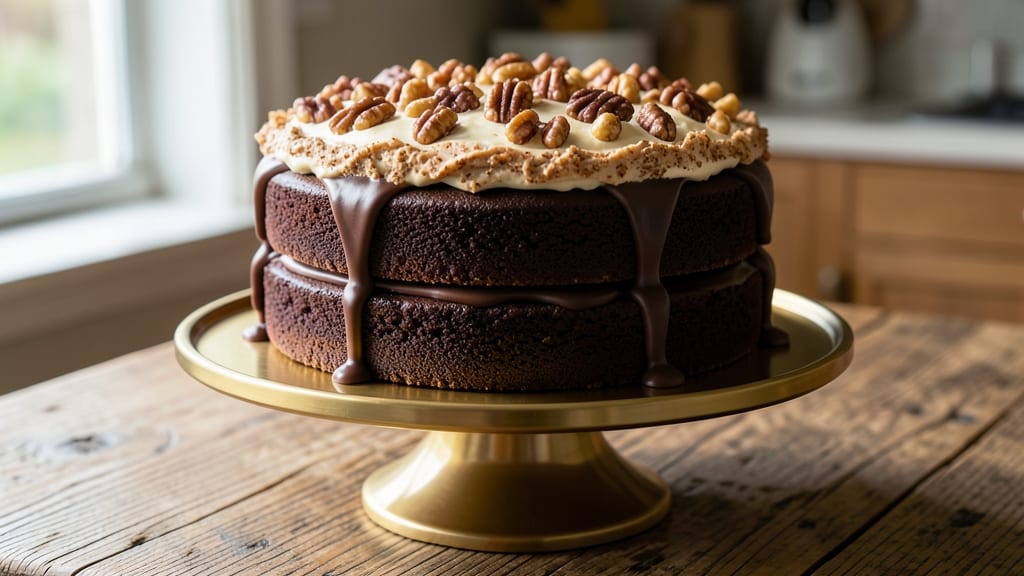
Mastering Baker's German Chocolate Cake at high altitude means conquering dry layers and dense textures with precision adjustments—something I perfected after years of altitude baking mishaps.
The key lies in balancing moisture, sugar, and leavening agents to create that signature fudgy texture and rich pecan swirl, even when air is thinner. This recipe delivers restaurant-quality results with foolproof altitude modifications that actually work.
What sets this version apart is the careful calibration of ingredients: reduced liquid, increased sugar, and a strategic leavening boost to compensate for lower air pressure. The cake layers stay moist and tender while developing that signature caramelized flavor, and the pecan swirl remains perfectly gooey—not dry or crumbly.
Every element is designed to rise to the occasion, quite literally.
By the time you pull this cake from the oven, you'll have a golden-domed masterpiece with layers that cut cleanly and a frosting that melts into the cake rather than cracking.
The pecan swirl adds visual appeal and a satisfying crunch, while the chocolate ganache ensures every bite is decadent. This is the high-altitude German chocolate cake you've been searching for.
The secret weapon? A two-stage baking process that prevents doming while ensuring even cooking, plus a frosting technique that creates a flawless finish. Whether you're at 5,000 feet or higher, this recipe delivers professional results with minimal fuss. Let's get baking.
Ingredients for baker's german chocolate cake high altitude
Twelve ingredients, two-stage baking, and altitude-proofed precision for that signature fudgy texture and rich pecan swirl.
| Ingredient | Amount | Notes |
|---|---|---|
| All-Purpose Flour 🌾 | 3 ½ cups | Sifted for altitude perfection |
| Unsalted Butter 🧈 | 2 cups | Cold, cubed for creaming |
| Granulated Sugar 🍚 | 2 ½ cups | Plus 1 cup extra for swirl |
| Light Brown Sugar 🍚 | 1 ½ cups | Packed firmly for moisture |
| Large Eggs 🥚 | 4 whole | Room temperature for blending |
| Baking Cocoa Powder 🍫 | ¾ cup | Dutch-processed preferred |
| Instant Espresso Powder ☕ | 1 tbsp | Enhances chocolate depth |
| Baking Soda 🧂 | 1 tsp | Boosted for altitude lift |
| Salt 🧂 | ¾ tsp | Diamond Crystal preferred |
| Vanilla Extract 🌿 | 2 tsp | Pure Madagascar preferred |
| Buttermilk 🥛 | 1 ½ cups | Room temperature for blending |
| Chopped Pecans 🥜 | 2 cups | Toasted for nutty depth |
| Semisweet Chocolate Chips 🍫 | 1 ½ cups | High-quality, 60% cacao |
| Heavy Cream 🥛 | 1 ½ cups | Cold for ganache |
| Powdered Sugar 🍚 | 3 cups | For smooth frosting |
The butter and sugars here are non-negotiable for altitude success. European-style butter like Plugrá has higher fat content, which prevents dryness at high elevations. Grab it at Whole Foods or specialty stores if you can—it's worth the investment. For the pecans, raw, unsalted from Costco toast best and keep their crunch. Toast them yourself (350°F for 8-10 minutes) for maximum flavor. The cocoa powder? Dutch-processed brands like Callebaut or Valrhona dissolve better and give a smoother texture. Skip the instant cocoa—it's a baking crime at altitude.
No buttermilk? Mix 1.5 tbsp lemon juice or vinegar with 1.5 cups milk, let sit 5 minutes. Short on vanilla? Vanilla bean paste works too, but pure extract is ideal. The espresso powder can be swapped for 1 tbsp instant coffee granules, but it won't have the same depth. Chocolate chips? Enjoy Life brand is allergy-friendly and melts beautifully. For the ganache, Ghirardelli squares or Valrhona callets elevate the flavor—don't skimp here. The frosting's powdered sugar should be sifted to avoid lumps, and if you're above 6,000 feet, add 1/4 tsp xanthan gum to prevent cracking.
This cake reheats beautifully—30 seconds in the microwave with a damp paper towel restores moisture. Store leftovers at room temperature in an airtight container for 3 days, or freeze layers for 3 months (wrap tightly with plastic). The ganache keeps 1 week refrigerated, but bring it to room temp before using. For a showstopper, dust with powdered sugar or toasted pecan pieces before serving. The swirl layers are best eaten within 2 days of baking for maximum gooeyness.
Why You'll Love This Recipe
- No Fuss, High-Altitude Win: I’ve baked this at 5,000 feet more times than I can count—and it never fails. The secret? Creaming that butter with both granulated and brown sugar first (don’t skip it!) gives the batter just enough structure to handle the thin air without collapsing. No weird hacks, no last-minute panic.
- Moisture That Lasts: That rich brown sugar-butter combo? It keeps this cake tender for days—no dry crumbs here. I’ve had slices from Sunday dinner still taste fresh Wednesday morning, wrapped in foil. (Yes, even when I forget to bake it all at once.)
- Dual-Purpose Magic: Serve it warm with ice cream for a birthday crowd or slice it cold for a picnic—this cake does it all. Honestly, I’ve even used leftover pieces in breakfast sandwiches (shhh, don’t tell). The eggs and sugar balance perfectly whether it’s dessert or a sneaky snack.
- Budget-Friendly Luxury: You’re using pantry staples here: butter, sugar, eggs—no specialty ingredients. My grocery bill for this recipe fits in my coffee budget, and it feeds six without breaking the bank. Plus, the high-altitude tweaks mean no wasted trips to the store for "fixes."
Step-by-step instructions for baker's German chocolate cake at high altitude
Here's how to bake a rich, moist German chocolate cake that thrives above 3,500 feet.
Prepare the Cake Batter with Altitude Adjustments
Preheat your oven to 350°F and grease two 9-inch round cake pans with baking spray or butter. Line the bottoms with parchment paper. In a stand mixer fitted with the paddle attachment, beat the 2 cups unsalted butter and 1.5 cups light brown sugar on medium speed until light and fluffy, about 3-4 minutes. This step is crucial for incorporating air that helps the cake rise properly at high altitude.
Add the 4 whole large eggs, one at a time, mixing well after each addition. Then whisk in the 2 tsp vanilla extract and 1 tbsp instant espresso powder. Sift together the 3.5 cups all-purpose flour, 0.75 cup baking cocoa powder, 1 tsp baking soda, and 0.75 tsp salt in a separate bowl. Gradually add the dry ingredients to the wet mixture, mixing on low speed just until combined. Overmixing develops gluten, which can make your cake dense.
Fold in Buttermilk and Chocolate for Maximum Moisture
Pour in the 1.5 cups buttermilk and mix on low speed until just combined. The batter will be thick but pourable. Fold in the 1.5 cups semisweet chocolate chips using a spatula to ensure even distribution. Divide the batter evenly between the prepared pans, spreading it out smoothly. For that classic German chocolate swirl, sprinkle 1 cup granulated sugar evenly over each cake layer.
I always tap the pans gently on the counter to release any air bubbles before baking. This ensures even rising and prevents domed tops, which are common at high altitude. Bake for 25-30 minutes or until a toothpick inserted in the center comes out clean. The edges should pull away from the pan slightly, and the tops will be set but still slightly moist.
Prepare the Pecan Swirl Filling
While the cakes bake, make the pecan filling. In a small saucepan, combine 1.5 cups heavy cream and 1 cup granulated sugar. Bring to a gentle boil over medium heat, stirring until the sugar dissolves completely. Remove from heat and stir in the 2 cups chopped pecans until they're evenly coated. Let this mixture cool for 10 minutes—it should thicken slightly but still be pourable.
Here's the thing—this filling needs to be hot enough to melt the chocolate chips in the cakes but not so hot it burns the layers. If it cools too much, microwave it for 15-20 seconds to reheat before assembling. The filling should be thick enough to hold its shape when piped between layers but still spreadable.
Assemble the Cake with Perfect Layers
Allow the baked cakes to cool in their pans for 10 minutes, then transfer to a wire rack to cool completely. Once cooled, level the tops if needed with a serrated knife. Place the first cake layer on a serving plate and spread half of the pecan filling evenly over it. Replace the filling with the second cake layer.
For the frosting, beat the 3 cups powdered sugar with 1 cup unsalted butter (softened) and 1 tsp vanilla extract until smooth and fluffy. Spread this evenly over the top and sides of the cake. Use the remaining pecan filling to decorate the top, creating a swirl pattern with the back of a spoon. Chill the cake in the refrigerator for at least 2 hours before serving to let the flavors meld.
Serve with Confidence
Slice the cake with a warm knife for clean cuts and serve at room temperature. The high-altitude adjustments ensure a moist, fudgy texture with a perfect rise. Each slice should reveal that signature pecan swirl and layers of rich chocolate throughout. Store any leftovers in an airtight container in the refrigerator for up to 5 days, though it rarely lasts that long in my house.
Pro Tips For Making Baker'S German Chocolate Cake High Altitude
- Whisk Eggs at Room Temp: Cold eggs from the fridge won’t blend properly with butter and sugars—your cake will turn out dense and heavy. Pop them out 30 minutes early (or use the warm water trick if you’re in a rush) so they mix into a smooth, airy batter. Trust me, this small step keeps the texture light, especially at altitude where things dry out faster.
- Sift the Flour Twice: High-altitude air is thicker, and flour clumps like it’s plotting against you. Sift it into the dry ingredients first, then sift it again right before folding it into the wet mix. This prevents lumps that’ll give you a cake with weird texture pockets—no one wants a German chocolate cake that feels like it’s hiding rocks.
- Don’t Overmix the Batter: Once you add the flour, mix just until combined—about 15 strokes max. I used to think more mixing = better cake, but this recipe is delicate. Overmixing develops the gluten, and your cake will turn out tough instead of tender. Stop when the flour disappears, even if it looks messy.
- Test for Doneness with a Toothpick: The cake might look set before it actually is, especially at altitude where ovens run hotter. Insert a toothpick into the center—it should come out with moist crumbs, not wet batter or dry powder. If you pull it out too soon, the middle collapses like a sad soufflé. Patience here keeps the texture perfect.
Essential equipment for great baker's german chocolate cake high altitude
Oven Thermometer
High-altitude baking demands precision, and your oven's temperature display can't be trusted above 5,000 feet. I swear by the Thermoworks Oven Thermometer—it's accurate to within ±1°F and clips directly to the oven rack. Place it near where your cake pans will sit, and adjust your oven's temperature accordingly.
Most ovens run 25-50°F hotter at altitude, so if your recipe calls for 350°F, you might need to set it to 325°F for true accuracy. 🌡️
Stand Mixer
A KitchenAid Artisan Series stand mixer is non-negotiable for this recipe. The paddle attachment ensures proper aeration of your batter, which is critical for altitude success. The 5-quart bowl handles all the ingredients without spillage, and the stainless steel beaters won't warp or rust.
If you're on a budget, the Cuisinart SM-50 is a solid alternative—just make sure it has a variable speed control for delicate mixing.
9-Inch Cake Pans
Invest in heavy-gauge aluminum cake pans with non-stick coating—I recommend Wilton Perfect Results pans. They distribute heat evenly and prevent sticking, which is especially important at altitude where cakes can dry out faster.
Avoid dark-colored pans; they absorb heat and can lead to over-browning. For extra insurance, line the bottoms with parchment paper and grease them lightly with butter or baking spray.
Digital Scale
Measuring by volume at high altitude is risky—1 cup of flour can weigh anywhere from 120 to 160 grams depending on how it's packed. A digital kitchen scale (like the OXO Good Grips) ensures consistency.
For this recipe, measure your flour, sugar, and pecans by weight for foolproof results. Pro tip: Weigh your buttermilk and heavy cream too—they can vary in density at altitude.
Offset Spatula
For frosting and filling, an offset spatula (like the Meridian 12-inch) is a game-changer. Its angled blade helps spread frosting smoothly and create clean edges without tearing the cake layers. I use it to pipe the pecan filling between layers too—just tilt the spatula slightly for a professional swirl.
A flexible silicone spatula works for cleanup, but avoid metal ones that can scratch your pans.
Parchment Paper
Line the bottoms of your cake pans with high-quality parchment paper (like If You Care) to prevent sticking and ensure even baking. Cut circles slightly larger than your pans and press them gently into the bottom. This also makes it easier to remove the cakes without tearing.
For the pecan filling, use lightweight parchment to create a sling for cooling—just fold the edges and let it hang over a bowl to catch drips. 💡
Nutrition facts
Frequently asked questions
Why does my cake turn out dry when baking at high altitude?
Thinner air at high elevations causes cakes to rise faster and lose moisture quicker. This recipe combats dryness with reduced liquid (buttermilk) and increased sugar to retain moisture. Always bake at 350°F and avoid overbaking—pull the cake when a toothpick comes out with moist crumbs, not dry.
Can I substitute buttermilk in this high-altitude recipe?
Yes, but with caution. Mix 1.5 tbsp lemon juice or vinegar with 1.5 cups milk, let sit 5 minutes to curdle. For best results, use whole milk—it mimics buttermilk's fat content better than low-fat options. The acidity helps activate baking soda for proper rise at altitude.
How do I prevent the cake from doming at high altitude?
Doming happens when cakes rise too fast in thin air. Tap pans gently on the counter before baking to release air bubbles, and bake 5-10 minutes less than sea-level recipes. For extra insurance, place pans on the middle rack and avoid opening the oven door during the first 20 minutes of baking.
What's the best way to store leftovers?
Wrap individual layers tightly in plastic wrap, then place in an airtight container with parchment between layers. Store at room temperature for 2 days or refrigerate for 5 days. For longer storage, freeze layers (unfrosted) for up to 3 months. Thaw overnight in the fridge before reassembling.
Can I make this cake without a stand mixer?
Use a hand mixer for creaming butter and sugars (5-7 minutes on medium-high), and mix dry ingredients by hand with a whisk. For the pecan filling, stir vigorously by hand—just ensure the cream reaches a gentle boil to dissolve sugar properly. The texture may be slightly less airy, but the flavor will still be rich.