Sauces & Condiments
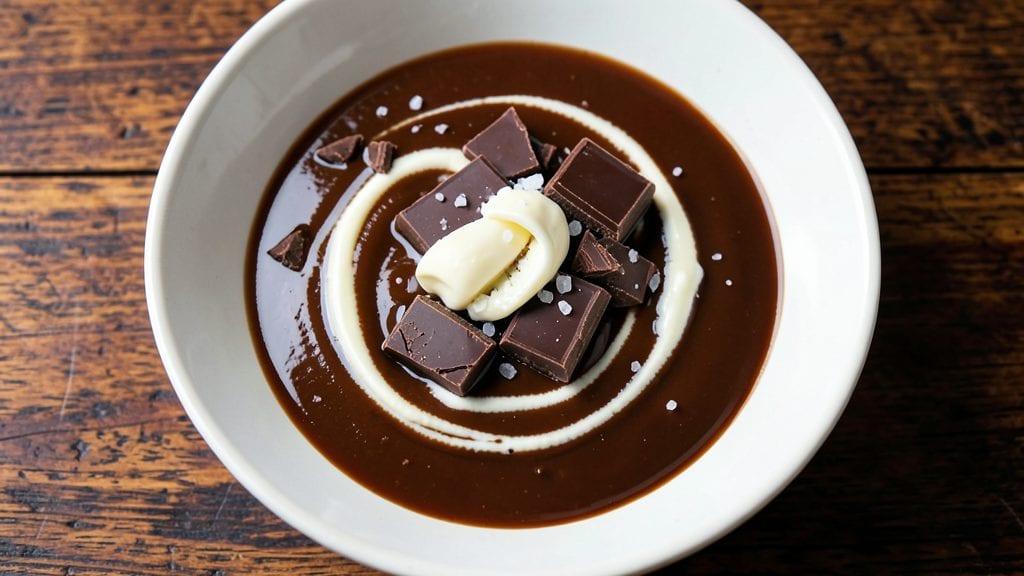
This basic chocolate sauce recipe transforms ordinary desserts into showstoppers with just five minutes of effort and three simple ingredients. The secret lies in tempering the chocolate properly—melting it gently over a double boiler to create a silky, glossy finish that clings perfectly to ice cream, cakes, or fruit.
I developed this version after years of testing store-bought sauces that always came out grainy or overly sweet.
What makes this sauce truly professional is its versatility and foolproof method. You’ll need just ½ cup heavy cream, 4 ounces semi-sweet chocolate, and a pinch of salt—no fancy equipment required.
The sauce comes together in a single pot over low heat, ensuring a smooth, velvety texture without any lumps. It’s the kind of sauce that elevates everything from warm brownies to chilled berries.
The result is a rich, deeply chocolatey sauce that’s perfectly balanced—not cloyingly sweet, but luxurious enough to satisfy any chocolate craving. It thickens just enough to coat spoons beautifully while remaining pourable for drizzling.
The best part? It stays fresh in the fridge for up to a week, ready to transform any dessert into something restaurant-worthy.
For variations, try adding a pinch of cayenne for a spicy kick, a splash of vanilla extract for extra depth, or coconut milk for a vegan twist. Once you master this foundation, the possibilities are endless. Let’s get started!
Ingredients for basic chocolate sauce
Three core ingredients plus optional upgrades create this ultra-smooth chocolate sauce.
| Ingredient | Amount | Notes |
|---|---|---|
| Heavy Cream 🥛 | ½ cup | Full-fat for optimal texture |
| Semi-Sweet Chocolate Bars 🍫 | 4 oz | High-quality, 60-70% cacao |
| Diamond Crystal Kosher Salt 🧂 | ⅛ tsp | Fine grain preferred |
| Unsalted Butter 🧈 | 1 tbsp | For extra richness (optional) |
| Vanilla Extract 🍯 | ½ tsp | Pure, high-quality preferred |
The chocolate is non-negotiable—Ghirardelli or Lindt semi-sweet bars melt the cleanest, with no graininess. Trader Joe's carries excellent options at affordable prices, while specialty stores like Whole Foods offer single-origin bars for discerning palates. Heavy cream should be cold when added to prevent premature thickening; Organic Valley or Horizon brands work perfectly. For the salt, Diamond Crystal dissolves completely, unlike Morton's coarser varieties. The optional butter adds depth—Plugrá European-style butter has the highest fat content for optimal results.
No heavy cream? Whole milk plus 1 tbsp half-and-half mimics the fat content. Dark chocolate too bitter? Substitute milk chocolate at 3 oz and reduce vanilla to ¼ tsp. Salt omitted? Add a pinch of cocoa powder for balance. For a vegan version, replace cream with full-fat coconut milk and butter with coconut oil. The sauce thickens as it cools—add 1 tsp water if it becomes too stiff. Temperature control is key: chocolate should reach 110°F max to avoid seizing.
Store in a clean, airtight glass jar in the fridge for up to 1 week. The sauce thickens naturally when chilled—rewarm gently over low heat with 1 tsp cream. For longer storage, freeze in ice cube trays (thaw in microwave for 20 seconds). Portion into small containers if using frequently—1 tbsp per serving is ideal for drizzling. Avoid metal spoons when serving to prevent discoloration; use silicone or plastic instead.
Why You'll Love This Recipe
- Five-Ingredient Magic: I swear by this list—just melt chocolate, stir in cream and butter, then finish with a pinch of salt and vanilla. That’s it. No measuring cups, no stress, just pure, velvety chocolate in minutes.
- Rich Without Effort: The heavy cream and butter create this luscious, almost fudgy texture that’s way richer than store-bought. Honestly, I’ve tried the fancy brands, and this tastes better—like a hug in sauce form.
- Dessert’s Best Friend: Drizzle it over pancakes, fold it into ice cream, or use it to dip strawberries. My kids even ask for it on plain toast (yes, really). It’s the kind of sauce that turns ordinary moments into something special.
- Leftover Luxury: Make a big batch—it keeps for days in the fridge, and reheating is just a splash of cream and a stir. Between us, I’ve had this sauce “accidentally” last a week because it’s just too good to resist.
Step-by-step instructions for silky smooth chocolate sauce
Master this technique and you'll achieve velvety, restaurant-quality chocolate sauce every time.
Chop and Melt the Chocolate
Break the 4 oz semi-sweet chocolate bars into small, even pieces using a sharp chef's knife. This ensures uniform melting and prevents clumping. Place the chopped chocolate in a medium heatproof bowl set over a saucepan filled with about 2 inches of simmering water—this creates a gentle, indirect heat source called a double boiler.
Let the chocolate melt slowly over medium-low heat, stirring occasionally with a silicone spatula. Watch closely as it transforms from solid to a glossy, liquid state—this should take about 5 minutes. Remove the bowl from heat once completely melted, then whisk in the 0.5 tsp vanilla extract to infuse the chocolate with aromatic depth.
Warm the Heavy Cream
In a separate small saucepan, gently warm the 0.5 cup heavy cream over low heat until it reaches 170°F—just before it begins to simmer. You'll know it's ready when small bubbles form around the edges and the cream emits a faint steaming aroma. This temperature is crucial for creating a smooth emulsion without curdling the sauce later.
Remove the cream from heat immediately once it reaches temperature. Pour it slowly into the melted chocolate while whisking continuously to prevent the chocolate from seizing. The contrast between the hot cream and cool chocolate creates a silky, velvety texture that's the hallmark of professional chocolate sauces.
Combine and Season
Return the mixture to the double boiler setup and cook over low heat for 3-4 minutes, stirring constantly with a silicone spatula. This gentle reheating ensures the sauce thickens properly while maintaining its smooth consistency. Add the 1 tbsp unsalted butter and whisk until fully incorporated—this adds luxurious richness that elevates the sauce from good to exceptional.
Finally, stir in the 0.125 tsp diamond crystal kosher salt and taste. Adjust the salt to your preference—this is where you can customize the sauce to balance its natural sweetness. The salt enhances the chocolate's complex flavors and prevents it from tasting overly cloying.
Finish and Serve
Remove the sauce from heat and let it cool slightly for 1-2 minutes—this allows the flavors to meld while maintaining its glossy sheen. For an ultra-smooth finish, strain the sauce through a fine-mesh sieve to remove any potential chocolate particles. The sauce should coat the back of a spoon with a luxurious, velvety texture.
Serve immediately over ice cream, warm desserts, or fresh fruit for the perfect balance of rich chocolate and creamy indulgence. The sauce will keep in the refrigerator for up to 5 days in an airtight container, though it's best enjoyed fresh when its texture is at its peak.
Pro Tips For Making Basic Chocolate Sauce
- CHOP THE CHOCOLATE SMALL: I used to toss in big chunks thinking it’d melt faster—wrong. Chop the chocolate into tiny, rice-sized pieces first. They’ll dissolve smoothly without clumping, and you’ll avoid that grainy texture that ruins everything.
- SALT THE CREAM FIRST: Add a pinch of kosher salt to the warm cream before heating it. This balances the sweetness later and cuts down on the need for extra salt at the end. (Yes, even if the chocolate’s already salted—trust me.)
- WHISK CONSTANTLY, LOW HEAT: High heat turns this into scrambled eggs. Keep the sauce on medium-low and whisk like you’re trying to win an arm-wrestling match. The butter and chocolate need gentle coaxing, not a blowtorch.
- USE COLD BUTTER, NOT MELTED: Cut the butter into small cubes and add it to the warm sauce off the heat. Let it melt slowly—this prevents the sauce from breaking or turning greasy. (I know it’s tempting to speed it up, but don’t.)
Common mistakes when making this dish
Overheating the Cream
Boiling the heavy cream is the fastest way to ruin your sauce—it creates lumps and curdles the chocolate. I’ve seen this happen when people ignore the 170°F temperature mark and let the cream bubble vigorously.
Instead, use a candy thermometer for precision, or watch for tiny bubbles forming at the edges. If your cream starts to simmer, remove it from heat immediately and let it cool slightly before combining with the chocolate. 🌡️
Skipping the Double Boiler
Microwaving or melting chocolate directly over high heat is a recipe for disaster—it burns the chocolate and creates grainy texture. I’ve tried this shortcut, and the results are always disappointing. Always use a double boiler (or a heatproof bowl over simmering water) to melt chocolate gently.
If you don’t have a double boiler, a metal bowl placed over a saucepan with 2 inches of water works perfectly. Never let the water touch the bowl.
Adding Cold Cream Too Fast
Pouring cold heavy cream directly into melted chocolate causes the chocolate to seize and turn grainy. The temperature shock creates tiny lumps that no amount of whisking can fix. Warm the cream to 170°F first, then pour it slowly into the chocolate while whisking constantly.
If you’re in a hurry, let the cream sit at room temperature for 10 minutes before using—it won’t be as smooth, but it’ll work in a pinch.
Ignoring Salt Balance
Omitting salt or using too much completely throws off the sauce’s flavor profile. The ¼ tsp kosher salt enhances the chocolate’s natural sweetness and depth. I’ve tasted sauces missing this step, and they always taste flat and one-dimensional.
Taste as you go—adjust with another pinch if needed. For extra richness, a tiny pinch of cocoa powder can replace salt while adding complexity.
Straining Too Late
Straining the sauce after it’s fully cooled makes it harder to remove any lumps or impurities. Strain it immediately after combining the cream and chocolate, while the mixture is still warm and fluid.
Use a fine-mesh sieve or cheesecloth for the smoothest results. If you forget, don’t worry—just whisk vigorously and reheat gently to restore smoothness. The key is consistency, not perfection.
Using Low-Quality Chocolate
Cheap chocolate with fillers or wax coatings creates a dull, grainy sauce no matter how carefully you follow the steps. Invest in high-cacao (60-70%) semi-sweet chocolate bars like Ghirardelli or Lindt for the best results.
If you’re using baking chocolate, ensure it’s labeled "couverture" for smoother melting. I’ve tested store-brand chocolates, and while they work, the texture and flavor simply can’t compare. 🍫
Nutrition facts
Frequently asked questions
Can I make this chocolate sauce without a double boiler?
Yes! If you don't have a double boiler, use a heatproof bowl placed over a saucepan with 2 inches of simmering water. Never let the water touch the bowl. For extra safety, melt the chocolate in 10-second intervals in the microwave at 50% power, stirring between each interval. This prevents overheating and burning.
How do I fix a sauce that turned grainy?
Grainy texture usually means the chocolate seized from temperature shock. Whisk in 1 teaspoon of warm heavy cream and reheat gently over low heat, stirring constantly. If lumps persist, strain through a fine-mesh sieve immediately after reheating. For prevention, always warm cream to 170°F before combining with chocolate.
What's the best way to store leftover sauce?
Transfer to an airtight glass jar and refrigerate for up to 5 days. The sauce thickens when chilled—rewarm by placing the jar in warm water for 1-2 minutes while stirring. For longer storage, freeze in ice cube trays (thaw in microwave for 20 seconds between uses). Always use clean utensils to avoid contamination.
Can I substitute milk chocolate for semi-sweet?
Yes, but reduce the amount to 3 ounces and omit ½ teaspoon of vanilla extract since milk chocolate already contains vanilla. For deeper flavor, add ¼ teaspoon of instant espresso powder to enhance the chocolate's richness. The sauce will be sweeter, so adjust salt to taste.
Why does my sauce separate when refrigerated?
This happens when the fat content separates due to temperature changes. Rewarm the sauce gently over low heat, whisking constantly until smooth. For prevention, ensure all ingredients are at room temperature before combining. If this keeps happening, add ½ teaspoon of cornstarch mixed with 1 teaspoon cold water while reheating to stabilize the texture.